When Should You Use a Gusseted Sterilization Pouch for Bulky Medical Instruments?
Release time: 2026-10-25
Table of Contents
Choosing sterilization packaging is not always straightforward, especially when medical instruments have wide handles, thick bodies, or irregular shapes. A standard flat pouch may work well for slim dental tools, but it can become difficult to use when an instrument takes up more space than expected. The package may feel tight, the instrument may press against the edges, and sealing can become less convenient. In these situations, a gusseted sterilization pouch may be a more practical option. Its expandable sides provide additional room for instruments that need more depth without requiring an excessively wide package. For dental clinics, hospitals, laboratories, and medical device manufacturers, understanding when this design is appropriate can help improve packaging efficiency. The key is not simply to choose a larger pouch, but to find a package that fits the instrument, supports the intended sterilization process, and can be sealed and handled correctly.
What Makes a Gusseted Sterilization Pouch Different?
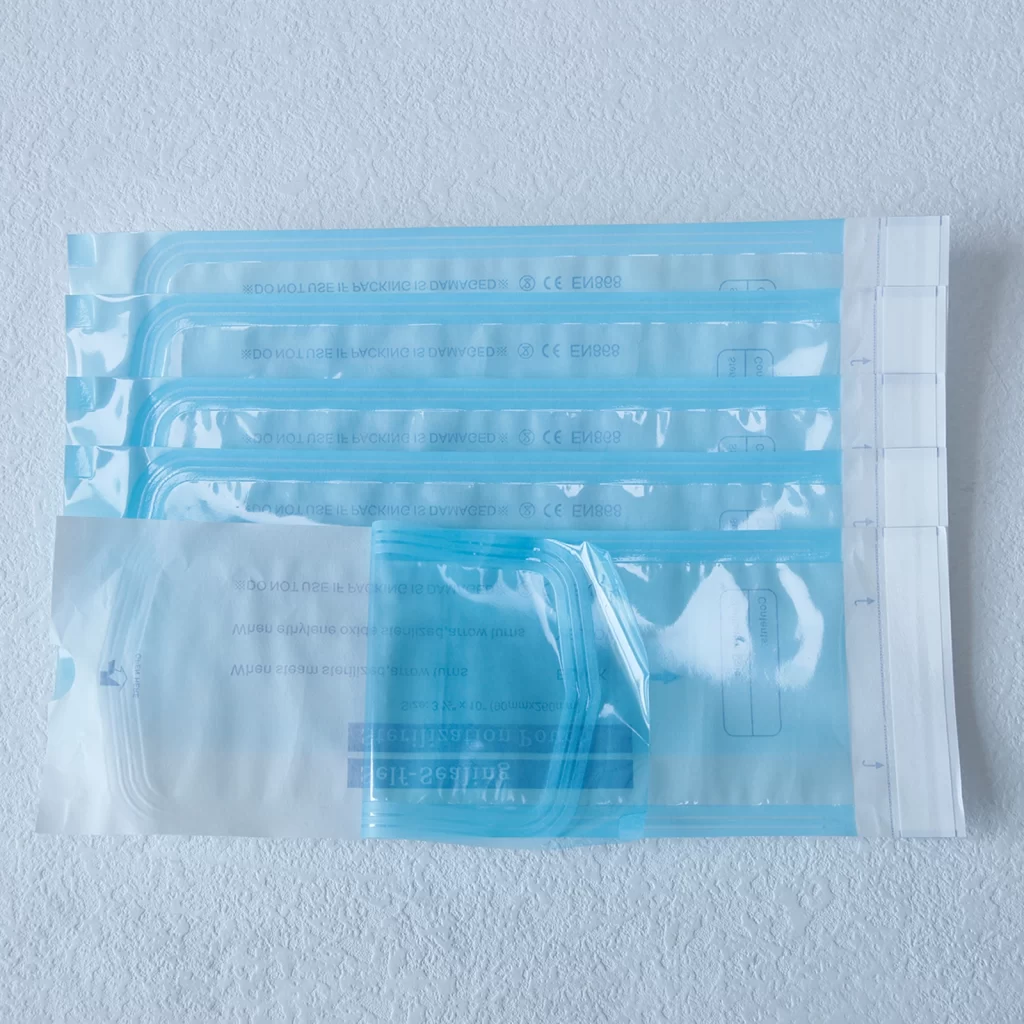
The main difference between gusseted and flat pouches is their structure. A flat pouch has a relatively simple shape, making it suitable for instruments that are narrow and easy to position. A gusseted design includes folded side sections that expand when the instrument is inserted. This creates additional internal space and can make packaging easier when an item has a bulky handle, a wider body, or an uneven profile.
That extra depth can be useful in everyday medical packaging workflows. Staff do not have to rely on pouch width alone to accommodate an instrument, and the package may sit more naturally around items with three-dimensional shapes. However, a gusseted pouch is not automatically the right choice for every large instrument. A long, slim instrument may still fit better in a flat pouch, while an unusually shaped device may require a different packaging format. The decision should be based on the instrument’s actual dimensions and the packaging instructions, rather than on the assumption that a more spacious pouch is always better.
Which Instruments May Need Extra Packaging Space?
A sterilization pouch for bulky instruments may be worth considering when the item is difficult to package in a flat format because of its thickness, width, or shape. Some surgical instruments have substantial handles or wider working ends, while certain reusable medical devices may have components that extend outward from the main body. These features can make it harder to position the instrument comfortably inside a narrow package.
Dental and medical facilities should assess each instrument individually instead of choosing packaging based only on its name or general category. Two instruments of similar length can have very different packaging requirements if one is flat and the other has a thick handle. Instrument sets also need careful consideration because placing multiple items together can increase the package’s overall thickness. A gusseted design may provide useful additional room, but it should never be used to justify overcrowding. Instruments must still be prepared, positioned, and packaged according to the applicable instructions and validated procedures.
How Does Pouch Design Affect Instrument Protection?
A good fit helps make packaging easier to handle, but the goal is more than simply getting an instrument inside the pouch. The package must remain suitable for the intended sterilization process and maintain its integrity during handling and storage. If an instrument is forced into a pouch that is too small, its edges may place unnecessary stress on the packaging material or seals. A tight fit can also make correct positioning more difficult.
Choosing a pouch with additional depth may reduce these practical problems when the instrument’s shape requires it. However, extra space alone does not guarantee effective sterilization or continued sterility. The packaging material, seal quality, sterilization method, loading arrangement, and manufacturer’s instructions all matter. Sharp tips and projecting components should be handled according to the facility’s established packaging procedures. Before routine use, confirm that the selected pouch is intended for the relevant sterilization method and application. A suitable package should accommodate the instrument without excessive pressure while still allowing the package to be closed and processed as directed.
Gusseted vs. Flat Sterilization Pouches
Both pouch styles have a role in medical packaging. The most useful option depends on the shape of the instrument and the requirements of the sterilization workflow.
| Comparison point | Flat sterilization pouch | Gusseted sterilization pouch |
| Basic structure | Flat, with no expandable side sections | Folded sides that provide additional depth |
| Typical fit | Slim or relatively flat instruments | Instruments with thicker or wider profiles |
| Packaging space | Mainly determined by length and width | Accommodates additional depth when expanded |
| Storage considerations | Often easier to stack when packages are flat | Package shape may take up more storage space |
| Main selection factor | Instrument dimensions and approved use | Instrument depth, shape, and packaging requirements |
This comparison is a starting point, not a substitute for product specifications. A flat pouch can be suitable for some larger instruments if their shape allows a safe fit, while a gusseted pouch may be unnecessary for a compact item. Always assess the actual package dimensions and confirm compatibility before making a purchasing decision.
What Should You Check Before Selecting a Gusseted Paper Pouch?
Before ordering a gusseted paper pouch, start with the instrument itself. Measure its length, width, and maximum thickness, including handles or parts that extend beyond the main body. Consider whether the instrument will be packaged individually or as part of a set. These details help determine whether the pouch’s usable dimensions and expandable depth are appropriate.
Next, check the packaging material and sterilization compatibility. Not every pouch is suitable for every sterilization method, so selection should follow the product specifications and the facility’s validated procedures. Review the available sealing format, required sealing space, and instructions for loading and closing the package. It is also sensible to evaluate how the finished package will be stored, transported, and opened. A pouch that fits an instrument on the workbench may still be inconvenient if the package is difficult to handle in the facility’s normal workflow.
For buyers sourcing packaging in larger quantities, consistency matters as well. Ask the supplier for product dimensions, material information, available configurations, and any relevant compatibility documentation. If standard sizes do not accommodate the intended instruments, discuss whether a suitable customized option is available. These checks help avoid selecting a package based on appearance alone.
How to Choose the Right Gusseted Sterilization Pouch
The right choice comes from matching three things: the instrument’s shape, the pouch’s usable space, and the intended sterilization process. Begin with a representative sample of the instruments that are most difficult to package. Compare their dimensions with the supplier’s specifications, paying particular attention to thickness and protruding components. Then confirm that the packaging can be sealed and processed according to the applicable instructions.
For clinics and healthcare facilities, a practical approach is to review packaging needs by instrument type rather than replacing every flat pouch with a gusseted design. Slim instruments may continue to work well in flat pouches, while bulkier items may benefit from the additional depth of a gusseted format. This keeps purchasing decisions tied to actual use instead of increasing packaging size unnecessarily.
Clean Dental offers a range of sterilization packaging products, including gusseted paper pouches. Buyers can review the Sterilization Gusseted Paper Pouch product category and contact the supplier to discuss dimensions, material requirements, and suitable options for their applications. Providing instrument measurements and sterilization requirements will make that conversation more productive.
FAQ
What is a gusseted sterilization pouch used for?
It is used to package instruments that need more internal depth than a standard flat pouch may provide. Suitability depends on the instrument dimensions and the pouch’s intended application.
Are gusseted pouches always better than flat pouches?
No. Flat pouches can be appropriate for slim instruments, while gusseted designs may be more practical for thicker or irregularly shaped items. The choice depends on fit and packaging requirements.
Can a gusseted pouch be used for any sterilization method?
Not necessarily. Always confirm the product’s stated compatibility with the intended sterilization method and follow the manufacturer’s instructions and validated facility procedures.
What information should buyers provide when requesting a gusseted pouch?
Provide the instrument’s length, width, thickness, packaging quantity, intended sterilization method, and any specific material or sealing requirements. These details help the supplier identify suitable available options.