When Is a Sterilization Pouch Roll More Practical Than Pre-Cut Pouches?
Release time: 2026-09-10
Table of Contents
Deciding on roll or pre-cut pouch may appear to be a minor packaging decision, but it can impact the efficiency of prepping medical and dental instruments for sterilization. Pre-cut pouches are convenient as they are ready to use, while a roll allows staff more freedom to choose the length of each package. For facilities that deal with instruments of all shapes and sizes, that flexibility can make a big difference.
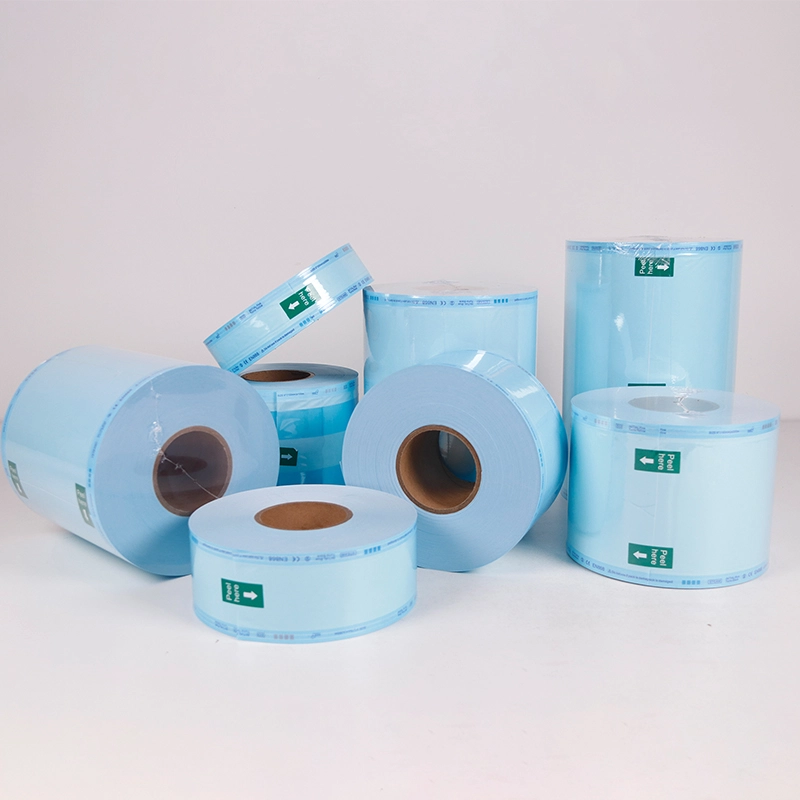
A Sterilization Pouch Roll is very useful when fixed pouch dimensions do not always fit the instrument being processed. Instead of stocking various sizes of pouches, staff can cut the material to the instrument and create the package required for each case. That’s not to say rolls are always better. A more useful question is whether the packaging format fits the facility’s instrument mix, daily workload and preparation routine.
When Does a Sterilization Pouch Roll Make More Sense?
The great thing about a roll is the flexibility. Dental and medical facilities rarely have instruments all exactly the same size. Some are short and compact, others long, broad or slightly irregular. Choosing a fixed pouch for each instrument can create a lot of wasted space around smaller items or make it hard to pack bigger instruments properly.
The great thing about a roll is the flexibility. Dental and medical facilities rarely have instruments all exactly the same size. Some are short and compact, others long, broad or slightly irregular. Choosing a fixed pouch for each instrument can create a lot of wasted space around smaller items or make it hard to pack bigger instruments properly.
Sterilization Pouch Roll vs. Pre-Cut Sterilization Pouches
Both formats have a place in medical sterilization packaging. The better option depends on how a facility works rather than on one format being universally superior.
| Factor | Pouch Roll | Pre-Cut Pouches |
| Size flexibility | Length can be adjusted | Fixed dimensions |
| Instrument variety | Suitable for mixed sizes | Best for standard sizes |
| Preparation | Requires cutting and sealing | Ready to package |
| Inventory | Fewer sizes may be needed | Multiple sizes may be required |
| Workflow | Flexible for varied instruments | Convenient for routine processing |
| Best suited for | Variable or irregular items | Standardized instrument batches |
For a dental clinic that mainly processes instruments within a few standard dimensions, pre-cut pouches may be faster. For a facility handling a broader range of instruments, a roll can offer more practical control over packaging size.
Why Does Flexible Sizing Matter?
The packaging should be large enough to contain the instrument without imposing unnecessary stresses, but over-sized packaging can be just as inefficient. If the pouch is much larger than the item contained within, more material is used and storage space may not be used efficiently.
Here a Sterilization Flat Roll can be useful. The material can be cut to the appropriate length depending on the instrument being packed making it easier to handle longer or less conventional items. This flexibility can help facilities that often change instrument sizes make purchasing and day-to-day packaging decisions.
Flexible sizing can also reduce the need to keep numerous pouch dimensions in stock. Instead of ordering and storing many different pre-cut formats, a facility may be able to manage its packaging requirements with a smaller range of roll products. For purchasing teams, that can make inventory planning easier while still supporting different instrument types.
When Are Pre-Cut Pouches Still the Better Choice?
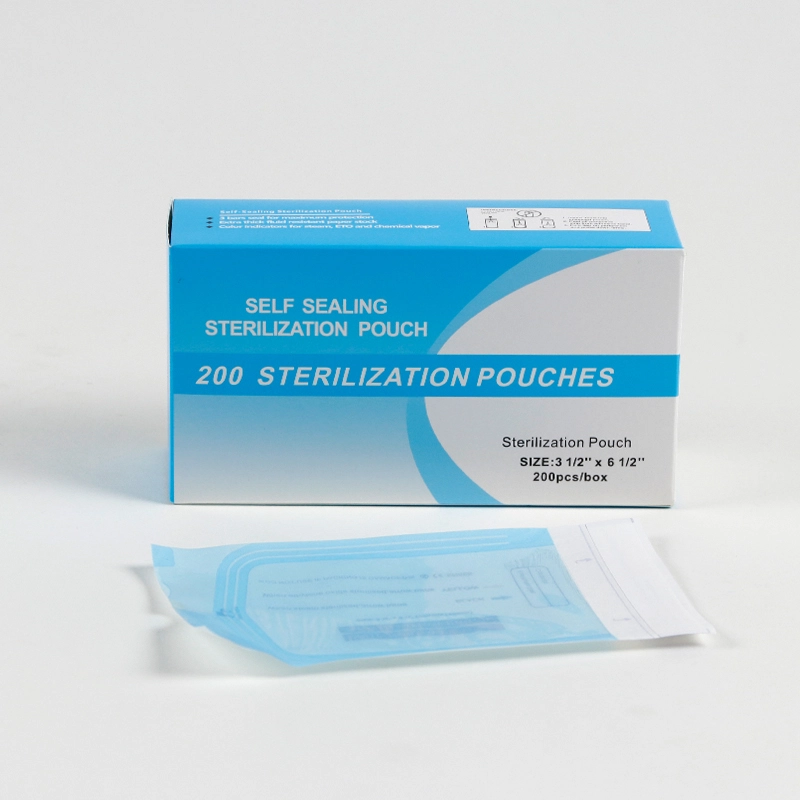
Rolls are quite flexible, but pre-cut pouches are still a very practical solution. The greatest advantage they have is convenience. Staff processes instruments multiple times that fit standard sizes so they don’t have to measure and cut the material before packaging, saving time.
This simplicity can trump flexible sizing in smaller clinics or facilities with a very consistent instrument inventory. A staff member can simply pick the right pouch, place the instrument inside, seal it, and move on to the next step in the sterilization workflow.
Pre-cut pouches can also work well when packaging speed is a priority and instrument dimensions rarely change. In these situations, the additional preparation involved with a roll may not provide enough benefit to justify changing the existing process. The goal should always be to choose a format that makes routine work easier rather than adding unnecessary steps.
How Should You Choose Between a Roll and Pre-Cut Pouches?
A practical decision starts with the instruments being packaged. If most instruments have similar dimensions, pre-cut pouches are usually convenient and straightforward. If sizes vary considerably, a roll can provide greater flexibility.
Another consideration is daily packaging volume. High-volume facilities may also appreciate the flexibility of changing the package dimensions without the need to stock a wide range of pouch sizes. Smaller clinics, however, may find the convenience of ready-made pouches useful for routine instrument processing.
Also worth looking at is storage and purchasing. A facility that uses many different pre-cut pouch sizes, has to deal with multiple product specifications and levels of stock. That inventory can be simplified in some workflows with a roll-based approach. Ultimately, the right choice depends on a compromise between flexibility, time to prepare, instrument variety and overall Sterilization Packaging requirements.
Choosing Packaging That Fits Your Workflow
There is no single packaging format that works best for every medical facility. A Sterilization Pouch Roll is a strong option when instrument dimensions vary, packaging flexibility is important, or staff want to avoid relying on numerous fixed pouch sizes. Pre-cut pouches remain a convenient choice for standardized instruments and fast, routine preparation.
For medical facilities and dental clinics, the most useful approach is to look at the complete workflow rather than focusing only on the packaging itself. Consider what instruments are processed most often, how many are packaged each day, how much storage space is available, and how easily staff can integrate the packaging into their existing routine. Choosing the right format can make sterilization preparation more efficient while keeping the packaging process simple and consistent.
FAQ
What is a sterilization pouch roll used for?
A sterilization pouch roll is used to create custom-length sterile barrier packages for medical, dental, and surgical instruments. It is particularly useful when instruments vary in length or do not fit standard pre-cut pouch dimensions.
Are sterilization pouch rolls better than pre-cut pouches?
Not necessarily. Rolls provide greater size flexibility, while pre-cut pouches offer greater convenience. The better option depends on instrument variety, packaging volume, and the facility’s workflow.
Can a sterilization pouch roll be cut to different lengths?
Yes. One of the main benefits of roll packaging is that the material can be cut according to the size of the instrument being packaged, provided the packaging and sealing process is used appropriately.
Are sterilization pouch rolls suitable for dental instruments?
Yes. They can be useful for dental instruments with different lengths and shapes, particularly when a clinic wants more flexibility than standard pre-cut pouch sizes can provide.