


Self-Sealing vs. Heat-Sealing Sterilization Pouches: Which Fits Different Medical Workflows?
Release time: 2026-09-24
Table of Contents
Medical instrument packaging may seem like a small detail, but the type of seal could actually make a big difference. The pouch must protect the instrument, allow for sterilization and be securely closed during storage and handling. Many dental clinics, hospitals and medical facilities often have to choose between a Self Sealing Sterilization Pouch or a heat sealing pouch.
Both are intended for sterile barrier packaging, but they are used in different workflows. Self-sealing bags are convenient and need little equipment, but heat-sealing bags offer more control for facilities that handle larger volumes of instruments. Knowing how each option works will help staff select packaging that fits their daily workload and not simply choose based on price or appearance.
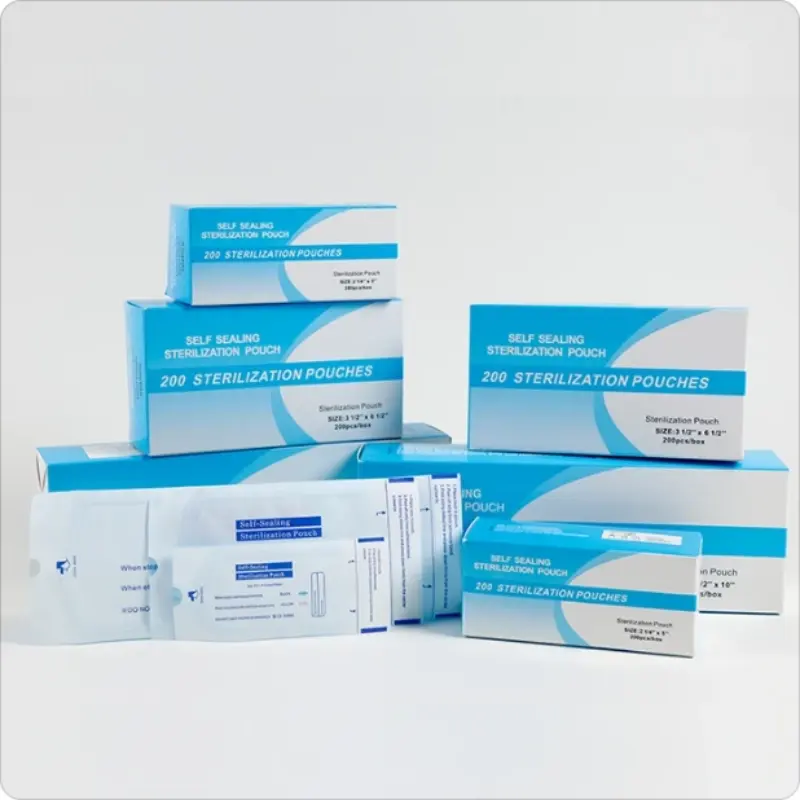
What Is a Self-Sealing Sterilization Pouch?
The self-sealing pouch has a built-in adhesive sealing strip, eliminating the need for a separate heat-sealing machine. After insertion of the instrument, the protective strip is removed and the flap is folded over to seal the package. Which makes the process simple, especially when instruments need to be packed quickly between procedures.
This can be a real convenience for smaller medical offices and dental offices. Staff do not have to adjust a sealing machine or spend extra time to prepare the equipment before packaging. A properly sealed pouch also offers a useful sterile barrier for instruments passing through typical sterilization workflows. The sealing operation is easy and self sealing pouches are especially useful when ease of operation and flexibility are important.
How Does a Heat-Sealing Sterilization Pouch Work?
A heat-seal Sterilization pouch is a sealed package made by a sealing machine. An adhesive strip is not used, instead the packaging material is sealed by means of controlled heat and pressure over a specified area. This technique allows the operator more control over the sealing process and may be useful in a facility that is packaging instruments on an on-going basis .
The main advantage is often consistency in high-volume processing environments. Once the equipment and sealing parameters have been correctly set, the operators may proceed with a standard packaging routine. Sterilization by heat sealing Therefore, when a clinic, hospital or central sterilization department is confronted with a large number of instruments and requires a repeatable sealing process, pouch solutions are frequently evaluated.
Self-Sealing vs. Heat-Sealing: What Is the Difference?
The biggest difference is not necessarily sterilization performance, but how the package fits into the facility’s workflow. A self-sealing pouch is convenient for individual or moderate-volume instrument preparation, while heat-sealing packaging may be more suitable for systematic, high-volume processing.
| Factor | Self-Sealing Pouch | Heat-Sealing Pouch |
| Sealing method | Adhesive strip | Heat sealing |
| Extra equipment | Usually not required | Heat sealer required |
| Setup | Quick and simple | Requires equipment setup |
| Workflow | Flexible and convenient | More standardized |
| Best suited for | Clinics and routine use | High-volume processing |
| Packaging control | Simple manual closure | Controlled machine sealing |
The right choice depends on the actual working environment. A small dental practice may value speed and simplicity, while a larger facility may prioritize consistency and production efficiency.
Which Pouch Fits Different Medical Workflows?
For facilities that process instruments in rather small batches, self-sealing packaging can ease everyday work. Staff can package instruments as needed without additional sealing equipment. This can be especially useful in dental clinics, outpatient departments and smaller treatment facilities where space and workflow simplicity are important.
The larger the volume of packaging, the more attractive heat sealing becomes. Larger medical facilities and central sterilization departments may need a more standardized process especially when many instruments are prepared throughout the day. Machine-assisted sealing can help create a consistent routine of packaging in those environments.
Also, it is worth considering the people using the packaging. A technically adequate pouch is not always the most practical choice if it slows down or complicates routine work. Choosing the right packaging solution requires consideration of the facility’s equipment, workload, staff habits and instrument processing needs.
How to Improve Sterilization Pouch Sealing Reliability
Good packaging practices are important, whatever the sealing method. Instruments should be clean and dry prior to packaging and the pouch should not be overfilled. Providing adequate clearance around the instrument avoids excessive stress on the package and sealing area.
The sealing surface should also be maintained clean and free of contamination. In the case of self-sealing products the adhesive area must be properly closed without wrinkles or gaps. If you are using a heat sealing system, you should set it up based on the recommendations of the equipment manufacturer and the packaging manufacturer, not guess.
Such small details can greatly affect the integrity of the packaging. A well-designed Medical Sterilization Packaging solution is only effective when it is accompanied by consistent handling, the right sterilization procedures and proper storage post processing.
Making the Right Choice for Your Facility
There is no one winner between self seal and heat seal pouches. Which is better depends on how the instruments are processed and how much packaging the facility processes each day.
Often a self-sealing pouch is the practical choice where convenience, quick preparation and minimal equipment are important. Heat sealing packaging may also make more sense for larger volumes of instruments in a facility that needs a repeatable process.
Medical device manufacturers, hospitals and dental clinics should be aiming to select packaging that helps the entire workflow, not only the sealing. Examining the workload, available equipment, types of instruments, storage needs and daily operating habits, the decision will usually be much clearer.
FAQ
Are self-sealing sterilization pouches reliable?
Yes. When the pouch is properly closed, used with a compatible sterilization method, and handled correctly, it can provide an effective sterile barrier for appropriate medical instruments.
Do self-sealing pouches require a heat sealer?
No. Self-sealing pouches have an integrated adhesive closure, so a separate heat-sealing machine is generally not required.
Are heat-sealing pouches better for high-volume use?
They can be a practical option for high-volume environments because the sealing process can be standardized with dedicated equipment.
Can self-sealing pouches be used for dental instruments?
Yes. They are commonly suited to routine dental instrument packaging when the pouch material and size are compatible with the sterilization process and instruments being processed.

