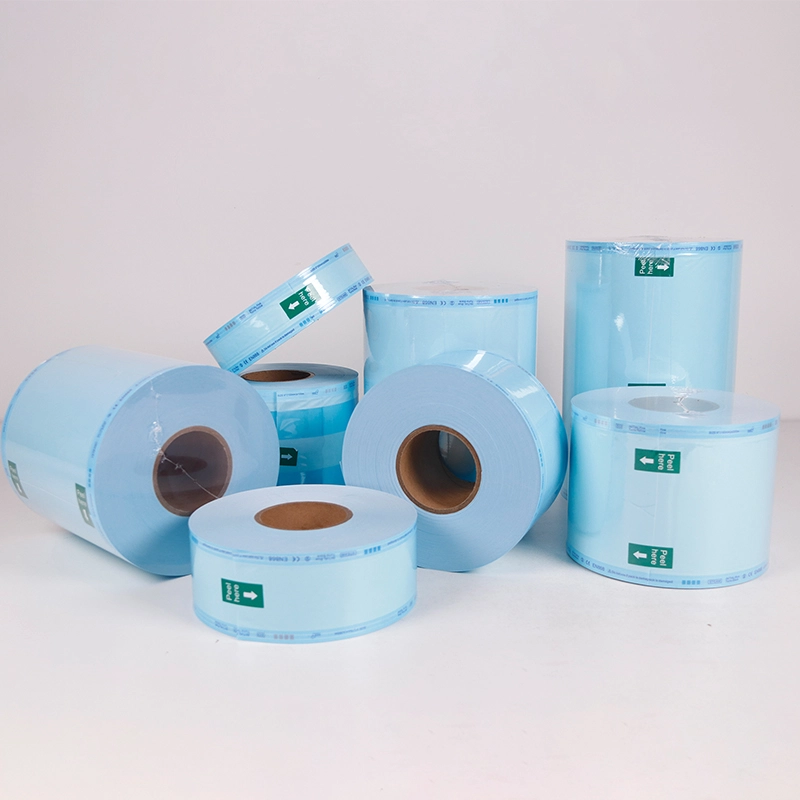
What is the difference between sterilization rolls for surgical instruments and those for dental instruments?
Release time: 2026-08-27
Both surgical and dental instruments require rigorous cleaning, sterilization, and sterile storage; consequently, sterilization rolls serve as vital packaging materials for maintaining the sterile barrier. While they share commonalities regarding sterilization principles and basic packaging requirements, differences in instrument size, structure, weight, and sharpness necessitate variations in properties such as puncture resistance, heat-sealing performance, transparency, and dimensions. Understanding these distinctions helps healthcare facilities and instrument manufacturers select the most appropriate packaging solutions for their specific applications.
Table of Contents
1. How do the packaging requirements for surgical instruments differ from those for dental instruments?
Surgical instruments typically include items such as surgical scissors, forceps, scalpels, retractors, and clamps, as well as other larger or structurally complex instruments. Since some of these instruments feature sharp edges, pointed tips, or substantial metal structures, the packaging material requires superior mechanical strength and puncture resistance.
Dental instruments generally include dental handpieces, probes, extraction forceps, dental mirrors, and scalers. Although some dental instruments also have sharp components, their overall dimensions vary widely, encompassing a large number of slender, small, and precision instruments.
Therefore, while the two types of sterilization rolls share similar basic functions, they may differ in terms of material strength, dimensions, and packaging structural design.
2. What key performance characteristics should be prioritized for surgical instrument sterilization rolls?
For surgical instruments, sterilization packaging must simultaneously meet requirements for sterilization compatibility, microbial barrier performance, puncture resistance, and seal reliability.
Surgical instruments can exert significant mechanical stress during packaging and transport. If the reel material lacks sufficient strength, the instrument tips may puncture the packaging, compromising the sterile barrier. Therefore, when selecting sterilization rolls for surgical instruments, key factors to consider include:
Puncture resistance
Tear strength
Heat-seal strength
Bacterial barrier properties
Sterilant penetration capability
Package integrity
Storage stability
For large surgical instruments, it is also necessary to select reels of sufficient width and length based on the instrument dimensions to avoid overstretching the packaging.
3. What are the specific requirements for dental instrument sterilization rolls?
One characteristic of dental instruments is their wide variety of specifications and significant differences in size.
For instance, small instruments like dental probes and tweezers may only require narrow sterilization flat rolls, whereas dental handpieces or instrument sets require more packaging space.
Additionally, some dental instruments have sharp tips, so the reel material must also possess adequate puncture resistance.
For dental applications, sterilization rolls also need to allow staff to easily view the instruments inside. Transparent plastic film helps medical personnel quickly identify the instrument type and packaging status, thereby reducing the likelihood of opening the wrong package.
Consequently, dental sterilization rolls usually need to strike a balance between transparency, flexibility, sealing performance, and mechanical strength.
4. Do the two types of sterilization rolls use the same sterilization methods?
Not necessarily.
The specific sterilization method depends on the instrument material, equipment capabilities, and the sterilization protocols adopted by the medical facility or manufacturer. Common methods include:
Steam sterilization
EO (Ethylene Oxide) sterilization
Low-temperature sterilization
Different sterilization methods impose different requirements on packaging materials.
For example, steam sterilization involves high temperatures and a moist-heat environment, so packaging materials require good temperature resistance and adaptability; EO sterilization requires materials that allow for sterilant penetration and subsequent aeration (desorption).
Therefore, when selecting sterilization rolls for surgical or dental instruments, one should not base the decision solely on the instrument type; it is also necessary to verify the actual sterilization method and the process parameters of the sterilization equipment.
5. Should completely different sterilization rolls be used for surgical instruments and dental instruments?
Not necessarily.
In many cases, sterilization rolls for surgical instruments and those for dental instruments can utilize similar medical-grade packaging materials and packaging structures. The factors that truly influence the choice usually include the instrument’s size, weight, sharpness, sterilization method, and expected storage duration.
For instance, small surgical instruments and certain dental instruments may be very similar in terms of size and packaging requirements; consequently, sterilization rolls of the same specification or similar performance grade can be used for both.
Conversely, some large surgical instruments require greater mechanical strength and larger packaging dimensions, whereas some precision dental instruments may prioritize flexibility, transparency, and ease of packaging.
Therefore, a more rational approach is not to simply distinguish between “surgical” and “dental” use, but rather to select appropriate packaging specifications and material properties based on the specific instrument.
6. How do you choose the right sterilization reel for surgical or dental instruments?
When purchasing sterilization rolls, you can evaluate your options by following these steps:
Step 1: Confirm instrument dimensions
Measure the length, width, and height of the instrument, and allow sufficient space for the seal area based on the actual packaging method.
Step 2: Assess instrument structure
For instruments with sharp edges, pointed tips, or heavy metal components, prioritize the reel’s puncture and tear resistance.
Step 3: Confirm the sterilization method
Determine whether steam, EO (ethylene oxide), or another low-temperature sterilization method will be used, and ensure the reel is compatible with the sterilization process.
Step 4: Check sealing performance
The heat-seal area must form a stable, continuous seal to prevent damage during transport or storage.
Step 5: Consider storage and transport conditions
If sterilized instruments require long-distance transport or long-term storage, pay extra attention to packaging integrity, material stability, and microbial barrier properties.
Sterilization rolls for surgical instruments and those for dental instruments are not entirely distinct categories of materials; the real differences lie in factors such as instrument size, structural characteristics, sterilization methods, mechanical strength, and packaging specifications. Therefore, when selecting sterilization rolls, a comprehensive assessment should be conducted based on the specific instruments and the actual sterilization workflow. Leveraging years of experience in the medical sterilization packaging industry, AnQing Clean Dental provides professional sterilization reel and packaging solutions tailored to the diverse sizes and configurations of dental instruments. By optimizing material selection, sealing performance, and specifications, the company helps clients establish more reliable and efficient sterile packaging systems for dental instruments.