


Maximizing Sterilization Efficiency Through Proper Pouch Sizing: The Ultimate Guide for 2026
Release time: 2026-01-21
Table of Contents
Sterility is not just a protocol; it is the backbone of patient safety. In this guide, we explore how the simple act of choosing the right sterilization pouch size can dramatically reduce autoclave failure rates, prevent torn packaging, and ensure compliance. Whether you run a dental clinic, a veterinary practice, or a Central Sterile Services Department (CSSD), this deep dive will help you master the art of packaging.
Understanding Sterilization Pouches: More Than Just a Bag
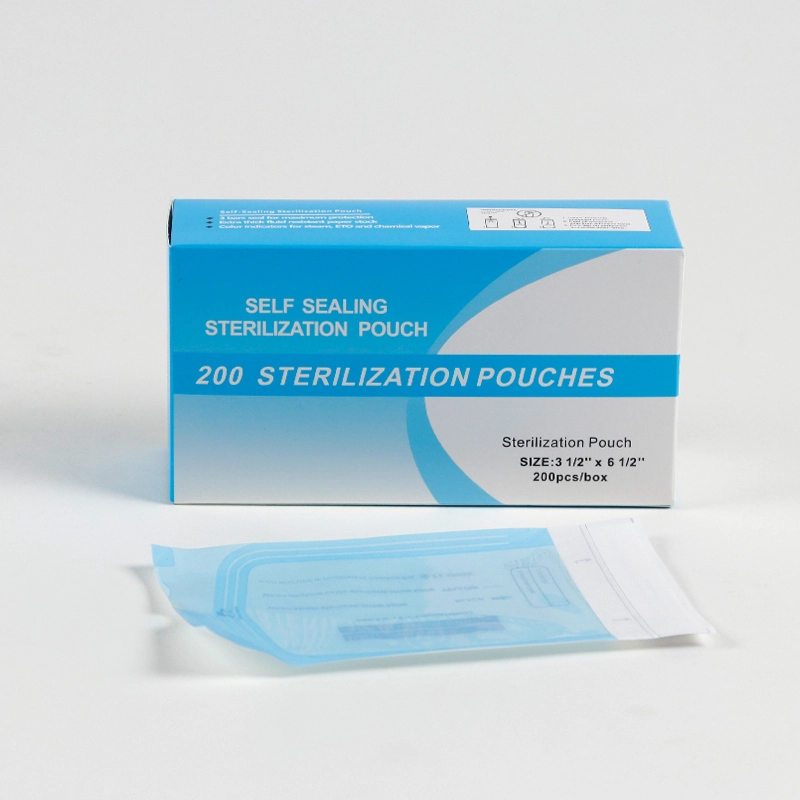
Before we can optimize for efficiency, we must understand the engineering behind the product. A sterilization pouch (often called a peel pouch) is not merely a container; it is a sophisticated breathing barrier system.
The Mechanism of Action
Sterilization pouches typically consist of two sides: a medical-grade paper or Tyvek® surface and a transparent plastic film.
- The Breathing Phase: During the sterilization cycle (usually steam or ethylene oxide), the pores in the paper side open up. This allows the sterilizing agent to penetrate the pouch and kill microorganisms on the instruments.
- The Cooling Phase: As the pouch cools and dries, these pores close tight, creating a hermetic seal that prevents bacteria from re-entering.
If this “breathing” process is hindered—by overstuffing or poor sizing—the sterilization agent cannot reach every surface of the instrument, rendering the cycle a failure.
Types of Pouches
- Self-Sealing Pouches: The industry standard for smaller clinics. These come with an adhesive strip and pre-folded lines to ensure a quick, secure closure.
- Heat-Seal Reels: Used in high-volume settings. These allow the operator to cut the pouch to the exact length required, though they require a separate heat sealing machine.
What to Look For: Quality Indicators Beyond Size
While sizing is critical, the quality of the pouch itself is the foundation of sterile processing. When sourcing pouches for your facility or inventory, prioritize these three features:
1. Robust Seal Integrity
The most common point of failure is the seal. Look for triple-sealed rails (three distinct lines of heat sealing on the edges). This redundancy ensures that if one track fails due to high pressure in the autoclave, two others remain to maintain sterility.
2. Validated Chemical Indicators
Modern pouches should have internal and external chemical indicators printed directly on the paper.
- External Indicators: Change color to show the pack has been through the process.
- Internal Indicators: Verify that the sterilant actually penetrated the pack.
- Multi-Variable Indicators: Look for Type 4 or Type 5 integrators that react to time, temperature, and pressure for the highest assurance.
3. “Clean Peel” Technology
When a nurse or technician opens the pouch in the operating room, the paper and plastic should separate cleanly. Inferior pouches often shred or release paper fibers (lint) upon opening. If these non-sterile fibers fall onto the instrument, the entire sterile field is compromised.
The Core Problem: Importance of Proper Size Selection
This is where most facilities lose money and compromise safety. “One size fits all” is a dangerous philosophy in sterilization. Improper sizing leads to two primary failure modes: the Burst (too small) and the Trap (too large).
The Risks of Undersizing (Too Small)
Trying to squeeze a large forcep or a bulky cassette into a small pouch is the leading cause of “wet packs” and seal failure.
- Seal Stress: As the autoclave heats up, the air inside the pouch expands. If there is no extra room, this pressure exerts force directly on the seals, causing them to pop open.
- Compromised Aseptic Presentation: If the instrument handles are touching the glued edges of the pouch, it becomes nearly impossible to peel the pouch open without the instrument touching the unsterile outer edge.
- Tears and Punctures: Sharp tips of scissors or scalars pressed tight against the film will puncture the pouch as it expands and contracts during the vacuum cycle.
The Risks of Oversizing (Too Large)
Using a massive pouch for a single bur or small file is not just a waste of money; it’s a waste of sterilization capability.
- Movement Damage: If the instrument can slide back and forth aggressively inside the pouch, the heavy movement can damage the internal plastic film or the instrument itself.
- Air Entrapment: Excessive empty space inside a pouch retains air. Air is an insulator. If the autoclave cannot effectively remove that air pocket, the steam may not contact the instrument surfaces within that pocket, leading to non-sterile instruments.
- Autoclave Crowding: Oversized pouches take up valuable tray space. Overlapping pouches prevents steam circulation. By using the correct size, you can fit more instruments per cycle, reducing the total number of cycles run per day (and thus saving energy).
The “Thumb Rule”: How to Measure Correctly
To maximize efficiency and safety, implement a strict sizing protocol in your packaging area. Here is the industry-standard formula for selecting the right strong seal sterilization pouch.
Step 1: Measure the Instrument
Measure the width, length, and height (thickness) of the instrument or cassette you intend to package.
Step 2: The Width Calculation
- Formula: Instrument Width + Instrument Height + 2 cm (approx. 0.75 inches).
- Why? You need roughly 1 cm of clearance on each side of the instrument to ensure the seal is not under stress.
Step 3: The Length Calculation
- Formula: Instrument Length + Instrument Height + 5 cm (approx. 2 inches).
- Why? You need space at the top for the seal (whether self-seal or heat-seal) and a convenient “thumb tab” at the bottom to allow the end-user to grip and peel the pouch easily.
The Visual Check
Once the instrument is inside, shake the pouch gently. The instrument should be able to move slightly, but not rotate or flip over. If the seal creates a “tent” over the instrument (stretching tight), the pouch is too small.
Wrapping Up: The ROI of Precision
In the high-stakes world of infection control, details matter. Proper pouch sizing is a low-effort, high-reward strategy.
By standardizing your sizing protocols, you achieve:
- Lower Costs: Reduced waste from burst pouches and fewer reprocessing cycles.
- Higher Safety: Guaranteed seal integrity and aseptic presentation.
- Better Efficiency: Maximized autoclave throughput.
Don’t let a $0.05 pouch compromise a $5,000 procedure. Take the time to audit your packaging inventory today. Ensure you have a gradient of sizes available—from small bur pouches to large cassette envelopes—so your staff never has to force a fit.
Ready to upgrade your sterilization workflow? Explore our range of ISO 11607-compliant sterilization pouches. Browse The Catalog Here
Common Questions About Sterilization Pouches & Protocols
A: You should only double-pouch if the manufacturer’s Instructions For Use (IFU) specifically state that their pouches are validated for it. If you do double-pouch, you must follow strict rules to ensure steam penetration:
- Size Matters: The inner pouch must fit inside the outer pouch without folding. Never fold the inner pouch to make it fit; this blocks the steam path.
- Orientation: Place the pouches Paper-to-Paper and Plastic-to-Plastic. This ensures the steam can penetrate the paper layers and the contents remain visible.
A: Modern infection control standards (such as those from the CDC and AAMI) have shifted from “time-related” to “event-related” shelf life. This means a pouch remains sterile indefinitely unless an event compromises it. “Events” include:
- The package is dropped on a dirty floor.
- The package becomes wet or damp.
- The package is torn or punctured.
- The seal peels open.
A: No. You should never write on the paper side of a sterilization pouch.
The Solution: Write only on the plastic film side using a non-toxic, indelible felt-tip marker, or place a sterilization label on the plastic side. Some pouches feature a dedicated “external” tab specifically for writing.
The Risk: Ink from pens or markers can wick through the porous paper and contaminate the instruments inside. Additionally, the pressure of a ballpoint pen can create microscopic pinholes in the paper barrier.
A: How you load the chamber is just as important as how you pack the pouch.
- Paper-to-Plastic: If you must place them near each other, orient them so the paper side of one pouch faces the plastic side of the next. This ensures the steam (which enters through the paper) is not blocked by a layer of plastic.
- Don’t Stack Flat: Laying pouches flat on top of each other prevents steam circulation and causes condensation (wet packs).
- Use a Rack: Place pouches on their edge (like books on a shelf) in a pouch rack.
- Type 4 (Multi-variable): Reacts to two or more critical variables (e.g., time and temperature).
- Type 5 (Integrating): Reacts to all critical variables (time, temperature, and pressure) and is equivalent to the performance of a biological indicator. Type 5 offers a higher level of assurance and is the preferred standard for many modern dental and medical practices.

